Welcome to our company !
 English
 Spanish
 French
 German
 Italian
 Chinese (Simplified)
 Japanese
 Korean
 Arabic
 Portuguese

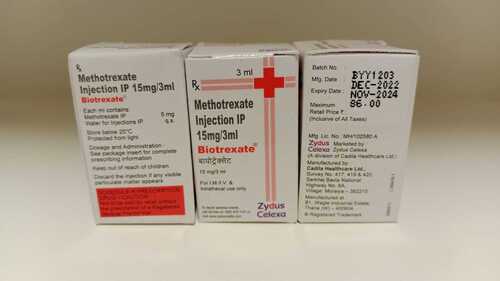
Methotrexate Injection
500 INR/Vial
Product Details:
- Salt Composition Methotrexate
- Indication Used for the treatment of certain types of cancer, severe psoriasis, and rheumatoid arthritis.
- Dosage Form Injection
- Feature Antineoplastic, immunosuppressive, cytostatic agent
- Ingredients Methotrexate sodium, Water for injection, buffer agents
- Application Intravenous, intramuscular or subcutaneous injection in a clinical or hospital setting.
- Ph Level 7.0-9.0
- Click to View more
X
Methotrexate Injection Price And Quantity
- 100 Vial
- 500 INR/Vial
Methotrexate Injection Product Specifications
- 24 months from manufacture date
- Store between 2°C and 8°C. Protect from light. Do not freeze.
- Methotrexate sodium, Water for injection, buffer agents
- Intravenous, intramuscular or subcutaneous injection in a clinical or hospital setting.
- Injection
- Clear yellow to orange solution
- 7.0-9.0
- Methotrexate
- Used for the treatment of certain types of cancer, severe psoriasis, and rheumatoid arthritis.
- Odorless
- Antineoplastic, immunosuppressive, cytostatic agent
- Single dose or multi-dose vial formats
- Pregnancy, lactation, severe renal or hepatic impairment
- Available as 50 mg/2 ml, 500 mg/20 ml, and other strengths, depending on manufacturer.
- Intravenous, Intramuscular, Subcutaneous
- Compatible with normal saline, do not mix with other drugs unless compatibility is known.
- Monitor blood counts, renal and liver function during therapy
- Glass vial
- Myelosuppression, mucositis, GI toxicity, hepatotoxicity, nephrotoxicity
- Yes
Product Description
Methotrexate Injection is a chemotherapy medication used in the treatment of various cancers, including leukemia, lymphoma, and breast cancer. With its active ingredient, methotrexate, it works by interfering with the growth and spread of cancer cells in the body. Administered intravenously or intramuscularly under medical supervision, Methotrexate Injection targets cancer cells while minimizing damage to healthy tissues, offering patients a chance at remission and improved quality of life. Despite potential side effects, the benefits of Methotrexate Injection in treating cancer outweigh the risks, providing hope and relief to patients and their loved ones.
Versatile Therapeutic Applications
Methotrexate Injection is primarily used for the treatment of various types of malignancies, severe psoriasis, and rheumatoid arthritis. Its wide therapeutic range is due to its antineoplastic and immunosuppressive properties, making it invaluable in cancer and autoimmune management.
Proper Handling and Administration
Available as clear, yellow to orange solutions in glass vials, Methotrexate Injection is administered intravenously, intramuscularly, or subcutaneously by healthcare professionals. The vials come in both single- and multi-dose formats to suit different dosing needs in clinical or hospital environments.
Storage and Stability
For optimal efficacy, Methotrexate Injection should be stored at 2C to 8C, protected from light, and never frozen. It boasts a shelf life of 24 months from the date of manufacture, ensuring reliable long-term storage when handled appropriately.
FAQ's of Methotrexate Injection:
Q: How is Methotrexate Injection administered and who should administer it?
A: Methotrexate Injection is administered via intravenous, intramuscular, or subcutaneous routes. It must be given by trained healthcare professionals in a hospital or clinical setting to ensure correct dosing and minimize potential complications.Q: What conditions is Methotrexate Injection commonly used to treat?
A: Methotrexate Injection is indicated for various types of cancer, severe psoriasis, and rheumatoid arthritis. Its antineoplastic and immunosuppressive properties make it suitable for both oncology and some autoimmune disorders.Q: When should Methotrexate Injection not be used?
A: Methotrexate Injection is contraindicated in pregnancy, lactation, and patients with severe renal or hepatic impairment. Always consult a healthcare provider for a full assessment before starting treatment.Q: Where should Methotrexate Injection be stored and how should it be handled?
A: Store Methotrexate Injection in a refrigerator between 2C and 8C, away from direct light. Do not freeze the vials, and always inspect the solution for discoloration or particulates before use.Q: What monitoring is required during Methotrexate therapy?
A: During Methotrexate therapy, it is essential to regularly monitor blood counts, renal function, and liver function to detect adverse effects early and adjust the treatment as necessary.Q: What are the potential side effects of Methotrexate Injection?
A: Common side effects include myelosuppression, mucositis, gastrointestinal toxicity, hepatotoxicity, and nephrotoxicity. Notify your healthcare provider immediately if you experience unusual symptoms or severe side effects.Q: What are the benefits of Methotrexate Injection in clinical use?
A: Methotrexate Injection offers significant benefits in controlling cancer growth, suppressing abnormal immune responses, and managing severe skin and joint conditions, leading to improved patient outcomes when used appropriately.Tell us about your requirement

Price:
Quantity
Select Unit
- 50
- 100
- 200
- 250
- 500
- 1000+
Additional detail
Mobile number
Email

Other Products in 'Anti Cancer Medicines' category

JEEDNYA PHARMA
GST : 27AGCPC6161C1ZX

- Office No 3070, Akshar Business Park, U Wing, Thane,Navi Mumbai - 400703, Maharashtra, India
- Phone : 08071781522

- Mr Umesh Mhatre (Manager)
- Mobile : 08071781522
-
 Send Inquiry
 Send Inquiry
Our Products
- Anti Cancer Medicines
- Bulk Drop Shippers
- ED Medicine, Generic and Branded
- OTC Medicine
- Pharmaceutical Medicine
- Pharmaceutical Tablets
- Pharmaceutical Injection
- Pain Relief Drugs
- Drop Shipping
- HIV and AIDS Medicine
- Anti Malarial Medicine
- Ayurvedic Medicine
- Fitness Product
- Pregnancy Kit
- Sexual Wellness Product
- Hepatitis Medicine
- Ed Medicine Drop Shippers
- Skin Care Medicines
- Allopathy
- Cargo & Storage
- Anti Anxiety Medicine
- Cargo Services
- Novo Nordisk Insulin
- Anti Diabetic Drugs & Injections
- Anti Depressant & Anti Anxiety Drugs
- Antiviral Medicine
- Hypertension And High Blood Pressure Drugs
- Steroids
- Bonista Medicines
- Anemia Medicine
- Life Saving Medicines
- Dermatology Cream
- Allergan Pharma Novoret
- Pharmaceutical Powder
- Antibiotics & Antiinflammatory Drugs
- Covid Care Drugs
- Rheumatoid Arthritis
- Cardio Vascular Drugs
- Anti Psychotic Anti Depressant
- Weight Loss Medicines
- Albendazole Tablet
- Hormones
- Meloxicam
- Eye Drops
 Send Inquiry
 Send SMS
 Call Me Free
JEEDNYA PHARMA
All Rights Reserved.(Terms of Use)
Developed and Managed by Infocom Network Private Limited.
Developed and Managed by Infocom Network Private Limited.

