Welcome to our company !
 English
 Spanish
 French
 German
 Italian
 Chinese (Simplified)
 Japanese
 Korean
 Arabic
 Portuguese

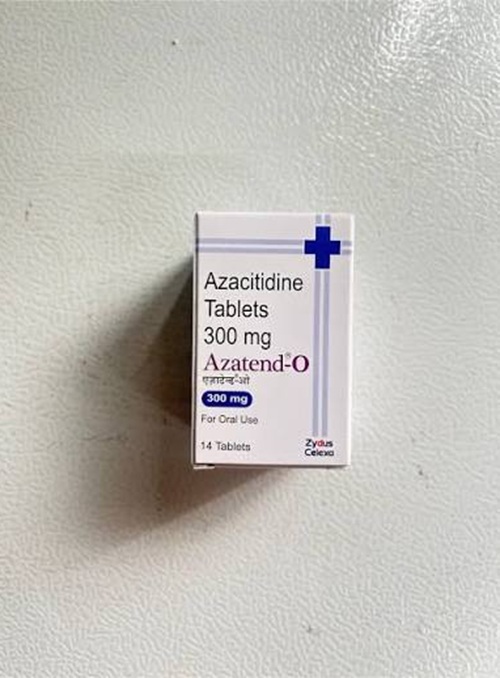
Azacitidine 300 Mg Tablets
14700.0 INR/Strip
Product Details:
- Origin of Medicine Imported
- Brand Name Azatend-O
- Drug Type Other
- Physical Form Tablets
- Function Other
- Recommended For Adults
- Suitable For Adults
- Click to View more
X
Azacitidine 300 Mg Tablets Price And Quantity
- 5 Strip
- 14700.0 INR/Strip
Azacitidine 300 Mg Tablets Product Specifications
- 1000 Strip
- Other
- Other
- Imported
- Tablets
- Azatend-O
- Adults
- Adults
Product Description
Azatend-O 300 mg is a prescription oral chemotherapy medication classified as a cytotoxic (cell-killing) antimetabolite and hypomethylating agent. It contains the active drug Azacitidine.
The primary components that define this drug include:
Core Mechanism of Action
Azatend-O mimics the natural nucleoside building blocks that cells use to synthesize genetic material.
- Tricking Cancer Cells: Rapidly dividing cancer cells mistakenly absorb the drug into their DNA and RNA chains.
- Gene Regulation: Once inside, it binds to and blocks specialized enzymes called DNA methyltransferases. This triggers "hypomethylation," which reactivates the body's natural tumor-suppressor genes to slow down or halt tumor growth.
- Cell Maturation: It halts the chaotic overproduction of immature cells, clearing the way for the bone marrow to produce normal, healthy blood cells again.
Primary Clinical Uses
It is specifically prescribed for adult patients who suffer from serious blood and bone marrow disorders and are ineligible for a hematopoietic stem cell transplant:
- Acute Myeloid Leukemia (AML): Used heavily as a continuous maintenance therapy to prolong survival and prevent the cancer from returning after initial chemotherapy has achieved remission.
- Myelodysplastic Syndromes (MDS): For high-risk cases where the bone marrow fails to produce enough functional mature blood cells.
- Chronic Myelomonocytic Leukemia (CMML): A rare overlap blood cancer marked by elevated monocyte counts.
Tell us about your requirement

Price:
Quantity
Select Unit
- 50
- 100
- 200
- 250
- 500
- 1000+
Additional detail
Mobile number
Email

Other Products in 'Pharmaceutical Tablets' category

JEEDNYA PHARMA
GST : 27AGCPC6161C1ZX

- Office No 3070, Akshar Business Park, U Wing, Thane,Navi Mumbai - 400703, Maharashtra, India
- Phone : 08071781522

- Mr Umesh Mhatre (Manager)
- Mobile : 08071781522
-
 Send Inquiry
 Send Inquiry
Our Products
- Anti Cancer Medicines
- Bulk Drop Shippers
- ED Medicine, Generic and Branded
- OTC Medicine
- Pharmaceutical Medicine
- Pharmaceutical Tablets
- Pharmaceutical Injection
- Pain Relief Drugs
- Drop Shipping
- HIV and AIDS Medicine
- Anti Malarial Medicine
- Ayurvedic Medicine
- Fitness Product
- Pregnancy Kit
- Sexual Wellness Product
- Hepatitis Medicine
- Ed Medicine Drop Shippers
- Skin Care Medicines
- Allopathy
- Cargo & Storage
- Anti Anxiety Medicine
- Cargo Services
- Novo Nordisk Insulin
- Anti Diabetic Drugs & Injections
- Anti Depressant & Anti Anxiety Drugs
- Antiviral Medicine
- Hypertension And High Blood Pressure Drugs
- Steroids
- Bonista Medicines
- Anemia Medicine
- Life Saving Medicines
- Dermatology Cream
- Allergan Pharma Novoret
- Pharmaceutical Powder
- Antibiotics & Antiinflammatory Drugs
- Covid Care Drugs
- Rheumatoid Arthritis
- Cardio Vascular Drugs
- Anti Psychotic Anti Depressant
- Weight Loss Medicines
- Albendazole Tablet
- Hormones
- Meloxicam
- Eye Drops
 Send Inquiry
 Send SMS
 Call Me Free
JEEDNYA PHARMA
All Rights Reserved.(Terms of Use)
Developed and Managed by Infocom Network Private Limited.
Developed and Managed by Infocom Network Private Limited.

